All Categories
Featured
Comparing Map Pack Versus Traditional Search Strategies

Navigating Business Account Management to Boost Visibility

Future-Proofing Local Search Tactics
Set up a systematic monitoring procedure so you always know what's working, what's decreasing, and where new chances lie. Vital Tracking Metrics METRIC TOOL EVALUATION FREQUENCY Organic impressions & clicks Google Search Console Weekly Keyword rankings Semrush/ Ahrefs/ GSC Weekly Core Web Vitals ratings PageSpeed Insights/ Browse Console Regular monthly Crawl errors & index protection Google Browse Console Weekly Content performance (time on page, bounce rate) Google Analytics 4 Monthly AI Introduction appearances Semrush Position Tracking/ manual checks Regular monthly Material decay (pages losing traffic) Google Analytics 4 + GSC Quarterly The Iterative SEO Cycle The most effective SEO teams operate on a 90-day review cycle: audit existing content for decay, revitalize the top 20% of decreasing pages, release new content targeting recognized keyword gaps, build internal links to brand-new pages, then measure results at the 90-day mark.
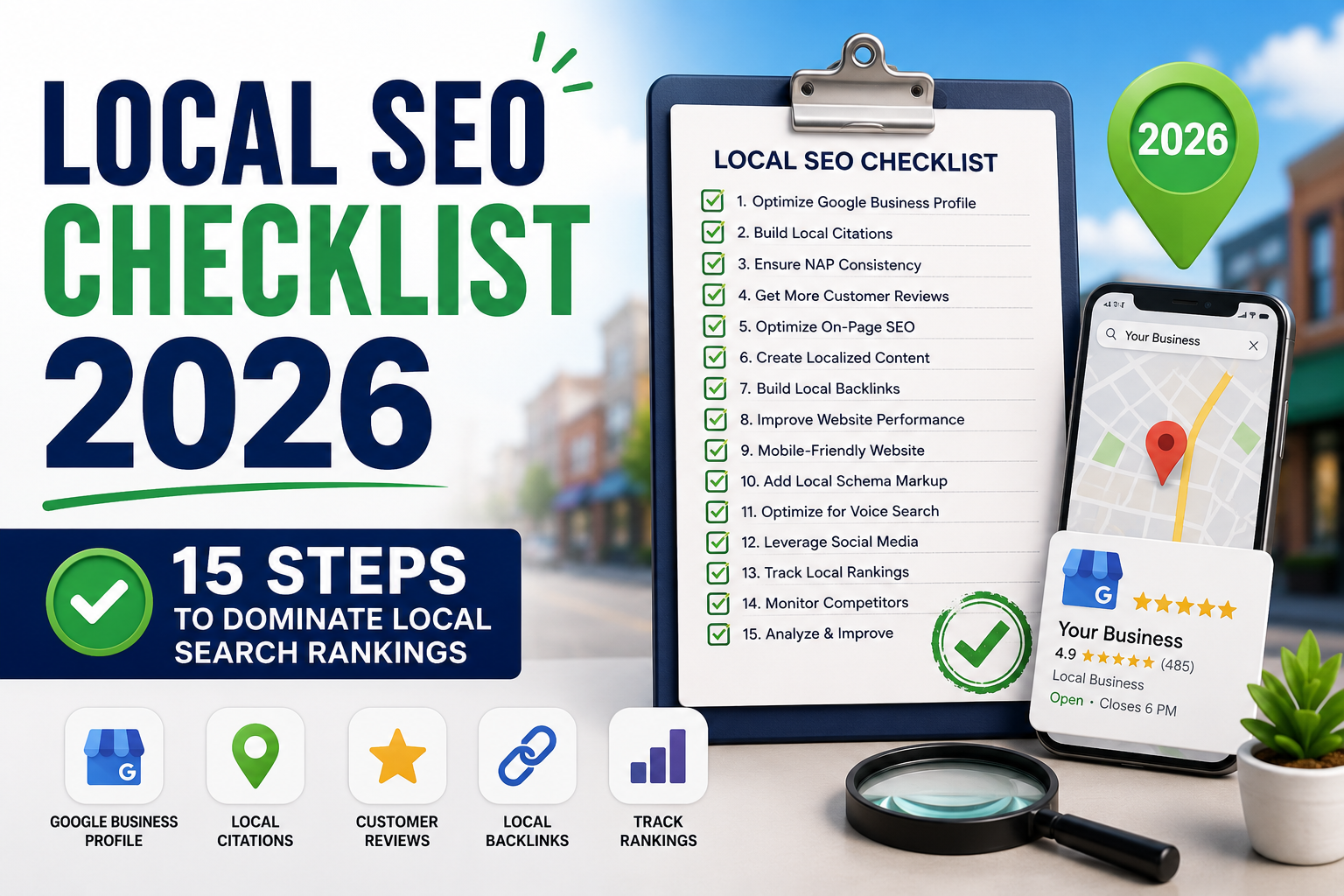
[target1:anchor_exact1]This checklist covers every on-page SEO signal that matters in 2026 from traditional basics to innovative AI optimization. Bookmark it, resolve it step by action, and review it every quarter.
Voice search, visual material, and AI are improving the landscape. This checklist will direct you through important SEO practices. From voice search optimization to AI-driven material, we cover it all.
[target2:anchor_exact1]What's New in 2026 Local Visibility
Let's dive into the future of SEO together. Search engines develop rapidly. An SEO checklist helps enhance your method.
Achieve measurable results that line up with your goals. A checklist offers structure. It's your roadmap to success in the ever-changing world of SEO. Constructing a strong SEO foundation is important. It ensures your site is available and user-friendly. Concentrate on core technical and on-page aspects. Guarantee your website performs well on mobile phones.
They help search engines understand your material and its significance. Craft distinct, keyword-rich titles for each page. Usage H1, H2, and H3 tags to structure material for clarity.

Latest Posts
Building Trust With Advanced Local Management
Advanced Strategies to Improve Map Pack Presence
Comparing Map Pack Versus Traditional Search Strategies